
Something is rotten in Denmark. This is a blog about my thoughts, feelings, pictures about Denmark. I was there for one and a half year.I was impressed and disappointed at the same time. Denmark looks very well from outside but very bad from inside.

Denmark has stolen children from their foreigner parents
Monday, March 01, 2010

Danish fury at apology for cartoon
A Danish newspaper apologised yesterday [Feb. 26th 2010] for offending Muslims by reprinting a cartoon of the Prophet Mohamed with a bomb-shaped turban, rekindling a heated debate about the limits of freedom of speech.
The Danish daily Politiken said its apology was part of a settlement with a Saudi lawyer representing eight Muslim groups in the Middle East and Australia. It drew strong criticism from the Danish media, which had stood united in rejecting calls to apologise for 12 cartoons that sparked fierce protests in the Muslim world four years ago. [...]
Politiken said it did not mean to offend Muslims in Denmark or elsewhere when it reprinted one of the most controversial cartoons, showing Mohamed wearing a turban shaped like a bomb with a lit fuse. Islamic law opposes any depiction of the prophet, even favourable, for fear it could lead to idolatry.
[...]. In a statement, Politiken said it "recognises and deplores" the fact that Muslims were offended by the caricature.
"We apologise to anyone who was offended by our decision to reprint the cartoon drawing," it said.
Tøger Seidenfaden, Politiken's editor-in-chief, said that the paper was apologising for the offence caused by the cartoon – not the decision to reprint it.
"We have the right to print Kurt Westergaard's drawings, we have the right to print the original 12 drawings, we have the right to print all the caricatures in the world," he told AP. "We apologise for the offence which the reprint has caused. That is what we apologise for." [...]
"Politiken's pathetic prostrating before a Saudi lawyer takes the first prize in stupidity," said Jørn Mikkelsen, editor-in-chief of Jyllands-Posten, which first printed the 12 cartoons. Mogens Blicher Bjerregård, the head of the Danish Union of Journalists, said Politiken was "kneeling before opponents of the freedom of press."
Source: The Independent
Reference: The Huffington Post
The Danish daily Politiken said its apology was part of a settlement with a Saudi lawyer representing eight Muslim groups in the Middle East and Australia. It drew strong criticism from the Danish media, which had stood united in rejecting calls to apologise for 12 cartoons that sparked fierce protests in the Muslim world four years ago. [...]
Politiken said it did not mean to offend Muslims in Denmark or elsewhere when it reprinted one of the most controversial cartoons, showing Mohamed wearing a turban shaped like a bomb with a lit fuse. Islamic law opposes any depiction of the prophet, even favourable, for fear it could lead to idolatry.
[...]. In a statement, Politiken said it "recognises and deplores" the fact that Muslims were offended by the caricature.
"We apologise to anyone who was offended by our decision to reprint the cartoon drawing," it said.
Tøger Seidenfaden, Politiken's editor-in-chief, said that the paper was apologising for the offence caused by the cartoon – not the decision to reprint it.
"We have the right to print Kurt Westergaard's drawings, we have the right to print the original 12 drawings, we have the right to print all the caricatures in the world," he told AP. "We apologise for the offence which the reprint has caused. That is what we apologise for." [...]
"Politiken's pathetic prostrating before a Saudi lawyer takes the first prize in stupidity," said Jørn Mikkelsen, editor-in-chief of Jyllands-Posten, which first printed the 12 cartoons. Mogens Blicher Bjerregård, the head of the Danish Union of Journalists, said Politiken was "kneeling before opponents of the freedom of press."
Source: The Independent
Reference: The Huffington Post
Sunday, February 28, 2010
New ACTA Leak: Denmark Does Not Support Transparency
Throughout the debate over ACTA transparency (Anti-Counterfeiting Trade Agreement), many countries have taken public positions that they support release of the actual text, but that other countries do not. Since full transparency requires consensus of all the ACTA partners, the text simply can't be released until everyone is in agreement. Of course, those same countries hasten to add that they can't name who opposes ACTA transparency, since that too is secret.
In an important new leak from the Netherlands (Dutch, English translation), a Dutch memorandum reporting back on the Mexico ACTA negotiation round names, pointing specifically to which countries support releasing the text and which do not. According to the Dutch memo, the UK has played a lead role in making the case for full disclosure of the documents. However, the memo indicates that several countries are not fully supportive including Belgium, Portugal, Germany, and Denmark. Of these four countries, the Dutch believe that Denmark is the most inflexible on the issue.
The memo also provides additional new information on the substance of the Mexico meeting. It confirms that countries are still not willing to make significant concessions. The countries are closing in on agreement on the border measures chapter, but are finding disagreements on civil enforcement due to differing legal systems. There is still no agreement on transit shipments or exports, nor on the scope of the treaty (EU continuing to push for broader coverage).
This is an important leak, since it provides at least one perspective on who remains a barrier to ACTA transparency. Those in the U.S., South Korea, Singapore, Belgium, Portugal, Germany, and Denmark should be demanding answers from their leaders.
From here
In an important new leak from the Netherlands (Dutch, English translation), a Dutch memorandum reporting back on the Mexico ACTA negotiation round names, pointing specifically to which countries support releasing the text and which do not. According to the Dutch memo, the UK has played a lead role in making the case for full disclosure of the documents. However, the memo indicates that several countries are not fully supportive including Belgium, Portugal, Germany, and Denmark. Of these four countries, the Dutch believe that Denmark is the most inflexible on the issue.
The memo also provides additional new information on the substance of the Mexico meeting. It confirms that countries are still not willing to make significant concessions. The countries are closing in on agreement on the border measures chapter, but are finding disagreements on civil enforcement due to differing legal systems. There is still no agreement on transit shipments or exports, nor on the scope of the treaty (EU continuing to push for broader coverage).
This is an important leak, since it provides at least one perspective on who remains a barrier to ACTA transparency. Those in the U.S., South Korea, Singapore, Belgium, Portugal, Germany, and Denmark should be demanding answers from their leaders.
From here
Tuesday, February 23, 2010
Denmark by Trier
Tourism officials hope the acclaimed Danish director's bleak vision of unsettling sexuality and brutal violence will attract more visitors to Denmark.
Monday, February 22, 2010
Free heroin clinic in Denmark
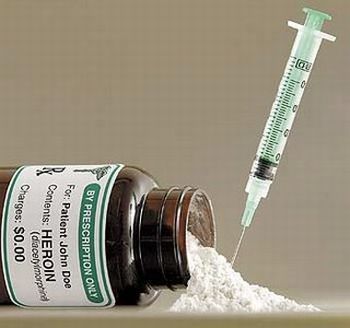 After years of contention, Denmark on Monday opened its first clinic equipped to distribute free heroin under medical supervision to people heavily addicted to the drug.
The Scandinavian country joins a number of countries like Switzerland, the Netherlands and Germany to allow prescriptions for medicinal heroin, or diamorphine, to be written out to a small group of addicts so hooked on the substance that more traditional substitutes like methadone have no effect.
The clinic is set to serve only 120 of some 300 hard-core heroin addicts, or only about one percent of all drug addicts in the country.
"Our objective is not to cure heroin addicts, but to help those who are not satisfied by methadone by providing them with clean heroin, allowing them to avoid disease and the temptation of criminal acts to obtain the drug," a doctor and head of the clinic Inger Nielsen told AFP.
Only addicts who have been referred from a methadone centre for treatment and who voluntarily request to enter the clinic will be permitted to participate in the programme, Nielsen said.
They will be treated with methadone for the first 14 days "so we can determine how much heroin to prescribe," she added.
The Danish parliament passed a law legalising the distribution of medicinal heroin in 2008, but the opening of the clinic was delayed until the city of Copenhagen agreed to house the programme.
The User Association, a group representing drug addicts, remains critical, blasting that patients are required to go to the clinic twice a day, seven days a week, to receive their doses.
"This means living like a zombie, without being able to hold down a job or study or have hobbies," head of the association Joergen Kjaer told reporters.
Source AFP
Tuesday, February 16, 2010
Friday, February 12, 2010
Thai women in Denmark
For who is interested, here is a documentary presented by the danish television DR1 (english subs) about Thai women's life in Denmark and marriages with danes.
Wednesday, February 03, 2010
Canada threatens Denmark
Their dispute over the ownership of tiny Hans Island has cooled in recent years, but conflict between Canada and Denmark is heating up over another diminutive object of contention: the northern shrimp.
Even though Denmark's shrimp haul amounts to just about one per cent of the total quota in the area -- of which Canada controls about 80 per cent -- the dispute raises the spectre of future struggles between the two countries at a time when warming waters and retreating sea ice in Arctic waters are expected to dramatically expand fishing activity in the coming decades between Nunavut and Greenland.
Read the full article at The Ottawa Citizen
Even though Denmark's shrimp haul amounts to just about one per cent of the total quota in the area -- of which Canada controls about 80 per cent -- the dispute raises the spectre of future struggles between the two countries at a time when warming waters and retreating sea ice in Arctic waters are expected to dramatically expand fishing activity in the coming decades between Nunavut and Greenland.
Read the full article at The Ottawa Citizen
Sunday, January 31, 2010
Muslims feeling less religious, more Danish
There are fewer strictly religious immigrants in Denmark, and more who feel Danish. The distance between the political debate and reality is incraseing, researchers claim.
While the government is dealing with the burka ban which had come to notion and is increasing requirements for foreigners who want permanent residence in Denmark, integration is going ahead, according to new data from the Catinét analysis institute, which researched a big group of refugees and immigrants regarding their relationship to religion and Danish-ness. Religion is taking up less space, and the percent of immigrants who feel Danish is increasing, the data shows.
Indeed the distance between the political debate and reality among immigrants is increasing, professor and integration researcher Ulf Hedetoft of Copenhagen University thinks.
"Thers is a very weak link between reality and the very marginalizing debate, in politics and in the media. Often with an unbalanced focus on individual cases," says Ulf Hedetoft, who is also head of the Nordic Migration Research, an association for researching immigration to the Nordic countries.
According to the study, the percent of immigrant who don't feel Danish at all, dropped from 30% in 2005 to under 20% in 2009. More and more feel both Danish and foreign or mainly Danish.
And regarding religion - about 80% of the participants were Muslims - the percentage who describe themselves as "most possibly religious" dropped from 19.8% to 10% in that period. At the same time, the groups of "least possibly religious" and "only a bit religious" grew.
Source: Islam in Europe and Kristeligt Dagblad (in danish)
While the government is dealing with the burka ban which had come to notion and is increasing requirements for foreigners who want permanent residence in Denmark, integration is going ahead, according to new data from the Catinét analysis institute, which researched a big group of refugees and immigrants regarding their relationship to religion and Danish-ness. Religion is taking up less space, and the percent of immigrants who feel Danish is increasing, the data shows.
Indeed the distance between the political debate and reality among immigrants is increasing, professor and integration researcher Ulf Hedetoft of Copenhagen University thinks.
"Thers is a very weak link between reality and the very marginalizing debate, in politics and in the media. Often with an unbalanced focus on individual cases," says Ulf Hedetoft, who is also head of the Nordic Migration Research, an association for researching immigration to the Nordic countries.
According to the study, the percent of immigrant who don't feel Danish at all, dropped from 30% in 2005 to under 20% in 2009. More and more feel both Danish and foreign or mainly Danish.
And regarding religion - about 80% of the participants were Muslims - the percentage who describe themselves as "most possibly religious" dropped from 19.8% to 10% in that period. At the same time, the groups of "least possibly religious" and "only a bit religious" grew.
Source: Islam in Europe and Kristeligt Dagblad (in danish)
Saturday, January 30, 2010
Stop Fur Industry in Denmark
Negligence is a widespread tendency in Danish mink and fox farms!
Denmark's major newspaper Ekstra Bladet, activists from the Animal Organization ANIMA and Danish TV2 has revealed unimaginable cruelty of mink and fox farms in Denmark.
Here are some examples:
A fox with three legs that are lagging around the grill. A fox with a mouth full of abscesses. More mink with lamb hind leg, which can not move. A whole raft of mink with open flesh wounds.
The animals are neglected in the Danish fur industry, which is one billion business and one of Denmark's major export successes.
We want immediate ban on Denmark's fur industry!
Petition: here
Denmark's major newspaper Ekstra Bladet, activists from the Animal Organization ANIMA and Danish TV2 has revealed unimaginable cruelty of mink and fox farms in Denmark.
Here are some examples:
A fox with three legs that are lagging around the grill. A fox with a mouth full of abscesses. More mink with lamb hind leg, which can not move. A whole raft of mink with open flesh wounds.
The animals are neglected in the Danish fur industry, which is one billion business and one of Denmark's major export successes.
We want immediate ban on Denmark's fur industry!
Petition: here
Sunday, January 24, 2010
Denmark and the U.S. in 2010
Opinion about Denmark at newgeography
Denmark is a good microcosm. It holds lessons for us here in the States, good and bad. [...]
Denmark is a mixed-economy (free market competition with a large public sector), social welfare, multi-party democratic country that, because of its small size and international exposure, is affected more quickly and deeply by social, economic and political forces at work in the Western (and wider) world. It was a founding NATO member (1949) and the first Nordic member of the European Union (which it joined, simultaneously with Britain and Ireland, on New Year’s Day 1973). For such a small, homogenous country, it has amazing social, economic and political diversity (for example, over the past 36 years some 15 different political parties have at one time or another garnered representation in Folketinget, the Danish Parliament).
Denmark has had, and continues to have, an outsized global influence relative to its size, whether in diplomacy, design, architecture, or quality manufacturing. Denmark gets a lot of things right. The standard of living is high, and so is the quality of life. As for the Danes themselves, both the famous and anonymous, they display an unmistakable national character combined with healthy individualism. (The unwritten law of Danish culture commands that one is not to draw attention to oneself, but it’s liberally violated!) [...]
Denmark is a good microcosm. It holds lessons for us here in the States, good and bad. [...]
Denmark is a mixed-economy (free market competition with a large public sector), social welfare, multi-party democratic country that, because of its small size and international exposure, is affected more quickly and deeply by social, economic and political forces at work in the Western (and wider) world. It was a founding NATO member (1949) and the first Nordic member of the European Union (which it joined, simultaneously with Britain and Ireland, on New Year’s Day 1973). For such a small, homogenous country, it has amazing social, economic and political diversity (for example, over the past 36 years some 15 different political parties have at one time or another garnered representation in Folketinget, the Danish Parliament).
Denmark has had, and continues to have, an outsized global influence relative to its size, whether in diplomacy, design, architecture, or quality manufacturing. Denmark gets a lot of things right. The standard of living is high, and so is the quality of life. As for the Danes themselves, both the famous and anonymous, they display an unmistakable national character combined with healthy individualism. (The unwritten law of Danish culture commands that one is not to draw attention to oneself, but it’s liberally violated!) [...]
How to get young people into work
 20-year-old Nanna Andersen is being told by the man at the jobcentre that he is closing her file and that her benefits will stop. But she isn't worried, because this month she starts a vocational course in animal care, after completing a 13-week course paid for by the jobcentre to help her figure out what she wants to do in life.
"It's been very helpful," Andersen says. "I don't think I would have gone into [further] education if I had not been on this programme."
Andersen is one of a hundred or so unemployed young people taking part in the scheme run by the city. It is one of the many policies Denmark has been pioneering to reduce youth unemployment. So far, they appear to be effective.
In the UK, 18.4% of under-25s are jobless, but the proportion in Denmark is only 3.2%. And part of the reason for these good results is that Denmark has intensive employment programmes to help those who are at most risk of joblessness.
"The Danes spend more money on building up the capabilities of people than we do," says David Coats, associate director for policy at the Work Foundation. "Their jobcentres are helping young people make the transition between education and the workplace much better than ours in the UK."
"For every person who comes here, we prepare a plan that will vary according to the person's situation," explains Louise Hare, a consultant at the jobcentre in south-west Copenhagen that deals only with under-30s who have little or no education. "We will try to identify the barriers preventing someone from getting a job or an education and see how we can help."
More at The Guardian
Subscribe to:
Posts (Atom)