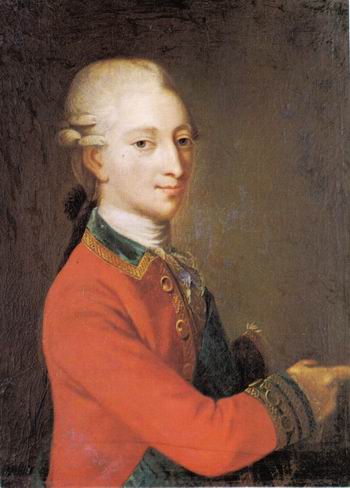
Denmark has stolen children from their foreigner parents

Wednesday, February 22, 2012

Quickies

1. Protest against ACTA in Aalborg - Denmark (febr. 25th 2012) (Demotix)

2. Has Denmark run out of TV actors? (The Guardian)

3. What Britain could learn from Denmark's childcare model (The Guardian)

Tuesday, February 21, 2012

Grooveshark to be censored in Denmark

A group of more than 30 rightsholders have won their case targeted against Grooveshark in Denmark. A court agreed that both the streaming music service and its users infringe recording label copyrights and granted an injunction forcing an ISP to initiate a block of the service. The anti-piracy group behind the action hopes that other ISPs will now follow suit.

Last year, a group of entertainment companies known collectively as RettighedsAlliancen sent a demand to the Danish Bailiff Court (known locally as Fogedretten) to have the country’s Internet service providers block US-based streaming music service Grooveshark.
RettighedsAlliancen chief Maria Fredenslund said that Grooveshark had no content agreements or licenses with members of her group, accused the service of being “completely uncooperative” in negotiations, and that effectively taking down content from Grooveshark had proven impossible.
The resulting legal action was directed “randomly” at telecoms company ’3′ with a complaint that the ISP’s customers breach copyright and as their supplier they are contributing to infringements.

Based on the Danish implementation of the Infosoc Directive, the court ordered an immediate injunction against ’3′ which prohibits it from facilitating subscriber access to Grooveshark.
“Grooveshark is an illegal site, which is really big and popular. But they have a business model that is based on trickery and fraud,” said RettighedsAlliancen chief Maria Fredenslund commenting on the news.

More on TorrentFreak

Wednesday, December 14, 2011

Hearts for Christmas

Christmas hearts is a unique Danish papercut tradition invented by the well-known Danish fairytale writer Hans Christian Andersen around 150 years ago. Basically, a Christmas heart consists of two pieces of folded glossy paper of different colours which are cut in a certain way and then woven together so that they form the shape of a heart. There are boundless numbers of possibilities for designs of these hearts.
There is a site dedicated to Christmas hearts.

Tuesday, December 13, 2011

Santa Lucia

In Denmark, the Day of Lucia (’’Luciadag’’) was first celebrated on December 13, 1944. The tradition was directly imported from Sweden by initiative of Franz Wend, secretary of Föreningen Norden, as an attempt "to bring light in a time of darkness”. Implicitly it was meant as a passive protest against German occupation during the Second World War but it has been a tradition ever since.

Although the tradition is imported from Sweden it differs somewhat in that the celebration has always been strongly centered on Christianity and it is a yearly local event in most churches in conjunction with Christmas. Schools and kindergartens also use the occasion to mark the event as a special day for children on one of the final days before the Christmas holidays but it does not have much impact anywhere else in society.

There are many legends associated with Lucia starting in fourth century Sicily. A young woman gave her dowry away to the poor and confessed herself a Christian. For this she was accused of witchcraft and put to death. Another legend tells of a famine in medieval days. A glowing figure dressed in white, Saint Lucia came across a great lake in the province of Värmland, Sweden. She brought gifts of food to the starving people. These legends vary, but Lucia shines as a symbol of light and hope in them all.

Although not widely observed, there are a number of additional historical traditions connected with the celebration. The night before, candles are lit and all electrical lights are turned off and on the Sunday closest to December 13, Danes traditionally attend church.

The Danish versions of the Neapolitan song clearly reflect its close connection to Christianity.


Saturday, October 15, 2011

Occupy Denmark

Occupy Denmark held on 15 October 2011 a demonstration at City Hall Square [Rådhus Pladsen] in Copenhagen in solidarity with Occupy Wall Street.

Photo: Flickr (set of pictures)

Saturday, October 08, 2011

Denmark Reshapes Its Immigration Policies

When the Liberal-Conservative coalition led by Lars Løkke Rasmussen came to power in Denmark in 2001, it relied on support from the right-wing and staunchly anti-immigrant Danish People's Party [Danske Folkeparty – DF]. As a result of that union, Denmark passed some of the strictest immigration and asylum laws in Europe. Among other things, its policies restricted benefits to immigrants, limited their ability to work and required Danes marrying a foreigner to post an $11,600 bond. The number of asylum seekers and relatives of immigrants applying for entry into the country dropped by nearly 70% over nine years, and the DPP moved closer to its goal: a complete end to immigration from non-Western countries. [...]

The government's common policy outlines a number of concrete changes. They include automatic citizenship for children born and raised in Denmark, regardless of their parents' citizenship; equal welfare rights for immigrants and Danes; vast reductions in application fees and cash securities; expanded work benefits for asylum seekers; and the possibility of dual citizenship, which will ease the naturalization process. The coalition also plans to ease family reunification rules, which have seen 800 children denied residency permits since 2005, frequently leading to the separation of children and their parents.


Read more at Time with interesting comments

Dual citizenship for Danes...

Danes will soon be allowed dual citizenship if the new government carries through with its promise to change the current situation. At present Denmark is one of a handful of European countries that does not grant dual citizenship, but that could all change soon, according to a report in newspaper Berlingske Tidende (link in danish).
Two sentences in the new coalition government’s platform seem to indicate that the contentious issue will soon rise to the fore again as it states: “Denmark is a modern society in an international world. Therefore dual citizenship must be permitted.”
People holding Danish passports have long been denied the right to hold another – a state of affairs that was fiercely upheld by the Danish People’s Party (DF), who are now no longer in a position of power.

More at Red Herring

Friday, September 30, 2011

Denmark to Provide Banks $72.6B Lifeline

Denmark’s central bank said it will provide as much as 400 billion kroner ($72.6 billion) as part of an extended collateral program to provide emergency liquidity to the country’s banks.
Lenders will also be able to borrow liquidity for six months, alongside the central bank’s existing seven-day facility, at a rate that tracks the benchmark lending rate, currently 1.55 percent, the bank said in a statement...

The country’s lenders face a deepening crisis that threatens to stall a recovery in Scandinavia’s worst-performing economy. Two Danish bank failures this year triggered senior creditor losses, leaving international funding markets closed to all but the largest banks. Lawmaker efforts to spur a wave of consolidation and help banks sidestep Denmark’s bail-in rules have so far failed.

Denmark’s liquidity lifeline mirrors programs in the euro area, where the European Central Bank has been pumping cash into the region’s money markets, including dollar liquidity, to support lenders.

The central bank is boosting its liquidity support to help lenders stay afloat as they struggle to refinance 158 billion kroner in debt backed by a state guarantee that expires over the next two years. The central bank’s pricing means “people will dare to use it,” Hovard said. “ There will be no stigmatization from using the facility. It’s so cheap that even the strong banks will consider using it.”
Still, the head of the country’s bank resolution unit, the Financial Stability Company, said the emergency facility may not be enough to prevent further insolvencies.

More at Bloomberg

Denmark taxes fatty products

Starting from this Saturday, Danes will pay an extra 30p on each pack of butter, 8p on a pack of crisps, and an extra 13p on a pound of mince, as a result of the tax.

The tax is expected to raise about 2.2bn DKK (£140m), and cut consumption of saturated fat by close to 10%, and butter consumption by 15%.
"It's the first ever fat-tax," said Mike Rayner, Director of Oxford University's Health Promotion Research Group, who has long campaigned for taxes on unhealthy foods.
"It's very interesting. We haven't had any practical examples before. Now we will be able to see the effects for real." The tax will be levied at 2.5 per Kg of saturated fat and will be levied at the point of sale from wholesalers to retailers.

Less than 10% of Danes are clinically obese, putting them slightly below the European average.
But researchers at Denmark's Institute for Food and Economic estimate that close to 4% of the country's premature deaths are a result of excess consumption of saturated fats.

From The Telegraph and BBC, interesting comments at Time

Tuesday, September 20, 2011

Freediving

Rune Hallum Sørenson (link in danish) sets a Danish record of 68 metres at the AIDA world freediving championships in Kalamata, Greece. Competitors swim on one breath, and the disciplines include maximum depth reached, maximum distance swum and static apnea – or longest breath held underwater.

Photo: Fred Buyle/ Hungry Eye Images (Guardian Eyewitness series)

Monday, September 19, 2011

Quickies

1. Sperm bank turns down redheads (The Telegraph)
2. Banking Crisis in Denmark (Bloomberg)
3. Gucci Helle Revamps Image to Beat Sex Gap in Danish Election (Bloomberg)
4. Denmark set to move to left in general election (Euronews)
5. Denmark poised to shift left in parliamentary election, elect country's first female PM (Sun Sentinel)
6. Queen of Denmark, please stop using Bearskin Hats in the Royal Guard (Petition)

Friday, September 16, 2011

Helle Thorning-Schmidt to be Danish PM

Denmark's centre-left has won the country's general election, ending nearly a decade in opposition.
With all votes counted, the bloc led by Social Democrat leader Helle Thorning-Schmidt had won a narrow majority in parliament.
She is set to become Denmark's first woman prime minister. Incumbent Lars Lokke Rasmussen has admitted defeat.
Ms Thorning-Schmidt had campaigned on a platform of tax rises and increased public spending.
She also promised to roll back tough immigration laws proposed by a junior partner of the current coalition.
The centre-left bloc won 89 seats in Denmark's 179-seat parliament against 86 for the centre-right. Turnout was high at 87.7%.

The country has seen its worst economic downturn since World War II. Although Denmark is a member of the EU, it has chosen not to adopt the euro.

Mr Rasmussen's liberal-conservative alliance has long relied on the anti-immigrant People's Party (DPP) to push legislation through parliament.
The recent decision of Denmark, a Schengen state, to reimpose border controls came after pressure from the DPP, the third-biggest party in parliament.
However, the main issue of the election has been the health of the national finances.
Ms Thorning-Schmidt campaigned on a platform of tax rises and increased public spending.
The economic crisis has turned Denmark's healthy surpluses into deficits, estimated to climb to 4.6% of GDP next year.
Local banks have also been struggling, with nine taken over by the state since the start of the crisis in 2008.
Ms Thorning-Schmidt has accused Mr Rasmussen of failing to spur growth and allowing the deficit to grow.
She advocates increased government spending, along with an unusual plan to make everyone work 12 minutes more per day.
An extra hour of productivity each week, the Social Democrats argue, would help kick-start growth.

In full at BBC